1. Work back from the date the goods must be in the shop
Every order has the same chain of steps: quote, artwork, sample or mock-up approval, production, inspection, transport, customs and delivery. For a standard catalogue item, the chain is short. For printed bags or boxes with your logo, add time for artwork checks and, where colour matters, a pre-production sample.
As a rule, plan on about 8–12 weeks from order to our warehouse: 25–45 production days and 25–45 days of rail or sea transport, plus delivery to you. Add a buffer for the first order with a new design. Our how it works page shows each step.
2. The factory holidays in late January–February
Production stops for 3–5 weeks in late January–February, and factories run slowly for some days before and after. Freight space fills up in the weeks before the break. Two consequences follow:
- orders for the spring collection and Easter should be confirmed by early December;
- an order placed in mid-January usually starts production only in March.
If your store opening is in March or April, treat the holidays as a fixed wall in the calendar.
3. Christmas: the packaging peak
Christmas is the busiest season for paper bags, gift boxes, ribbons, tissue paper and drawstring pouches. Printed packaging for Christmas should be ordered by late August–September. Later orders can still work for catalogue items without print, but factory capacity and freight space get tight in October.
A practical sequence for a shop or chain:
- June–July: count last year’s bag and box use per size, choose sizes and finishes;
- July–August: send artwork, approve the digital mock-up and the sample;
- late August–September: confirm the order and pay the deposit;
- October–November: goods arrive and are distributed to stores.
If you sell through December, order enough to cover the January sale as well. A second printed run in December rarely arrives in time.
4. Black Friday and Valentine’s Day
Online sellers need mailer boxes, PE mailers, tissue and thermal labels for Black Friday at the end of November. The order date is the same as for Christmas packaging: late August–September for printed items.
Valentine’s Day falls just after the factory holidays. Gift boxes, ribbons and jewellery boxes for February should be ordered with the Christmas run or confirmed by November at the latest, so that they leave the factory before the break.
5. Store openings and refits
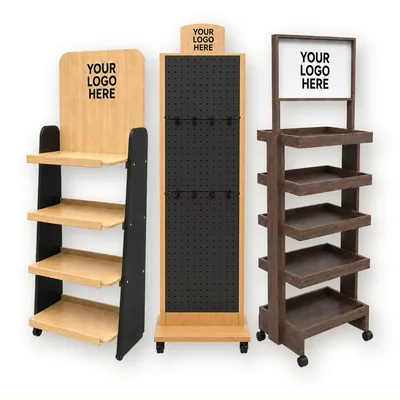
Openings and refits usually happen before the spring collection in March and the autumn collection in September. A fit-out list includes items with very different lead times:
| Item | What sets the lead time |
|---|---|
| Catalogue hangers, sign holders, price clips | Production and transport only |
| Gondola shelving, wire shelving, pallet trucks | Weight, pallet freight |
| Mirrors and lightboxes | Protective packing and pallet freight |
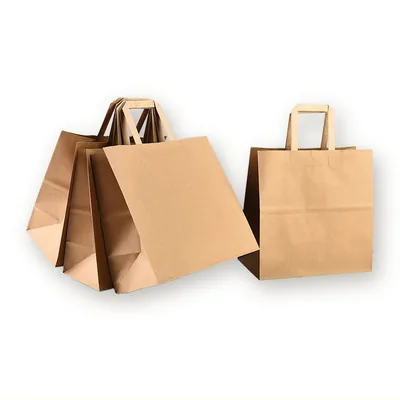
| Printed bags, boxes and tags | Artwork approval and print set-up |
| LED neon signs and 3D channel letters | Artwork, sample photo and documents |
For a March opening, confirm the list in November. For a September opening, confirm it by June. Our store fit-out page explains how a full list becomes one order and one delivery.
6. Trade fairs and events
Trade fair seasons run in spring and autumn. Roll-up banners, tension fabric backdrops, pop-up walls, promo counters and flags are light enough to send by air if the date is close, but printing still has to be approved. For a fair in March, send artwork in December. For a fair in September or October, send it by July.
Exhibitors often forget the second set: a spare banner print, carry bags for the frames and replacement fabric for the backdrop. Ordering them with the first run costs less than a rush order later.
7. Seasonal POS for brands
Brands that place counter displays and floor displays in retail chains work to the chain’s planogram dates. Cardboard displays are usually needed at the chain’s distribution centre several weeks before the promotion starts. Add that step to the calendar, and plan the display sample early, since the chain may ask for changes.
8. A twelve-month overview
- January: plan the spring refit list; factories closing for the holidays.
- February–March: production restarts; place autumn trade fair and refit enquiries.
- April–June: confirm autumn store openings and refits.
- June–July: Christmas packaging sizes, artwork and samples.
- August–September: confirm Christmas, Black Friday and Valentine’s packaging.
- October–November: deliveries for the peak; confirm spring openings and spring fairs.
- December: final confirmations before the holiday break.
9. Size the seasonal quantity
The most common mistake is not the date but the quantity. Printed packaging is priced by quantity break, for example 500, 1,000 or 5,000 pieces, plus a one-off set-up for plates, screens or foil dies. The jump from one break to the next often lowers the unit price enough that a larger run costs only a little more in total. Before choosing, check three things:
- how many bags or boxes each store used last December, per size;
- whether the design is seasonal or can be used all year;
- how much storage space the stores and the warehouse really have.
A neutral design with your logo on kraft or white paper can run all year, so a larger quantity is safe. A Christmas print has to be used by January, so order closer to real use. For chains, it often pays to split one print run across sizes rather than order one size in a very large quantity.
10. Keep a reorder buffer
Bags, boxes and tags run out faster than fixtures. Keep a reorder level per size, and reorder printed packaging when stock falls to about two to three months of use. A repeat order with approved artwork moves faster than the first one, because no new sample is needed. Keep the approved sample and the print file in one place so that the next order can be placed with a short e-mail.
How we help
Send us the dates you work to and your list. We return an offer within 2 working days with lead times per line, so you can see which items need to be confirmed first. Request a quote.