1. Start from the campaign length
The first question is how long the display has to stay in the store:
- A promotion of a few weeks: cardboard floor and counter displays. Light, printed all over, delivered flat and recycled after the campaign.
- A season or a year: acrylic risers and cases, or wooden display racks, with changeable graphics.
- Several years: metal racks, pegboard and rotating stands, gondola end units, made to carry weight and take daily handling.
Many brands combine them: a permanent metal or wooden stand with a cardboard header or printed panel that changes each campaign. Our display stands category shows all four material groups with MOQs and “from” prices.
2. Cardboard displays
Cardboard floor displays, dump bins and counter displays are the standard for promotions in grocery, pharmacy and drugstore chains. Points to specify:
- board construction and flute, which set the load per shelf;
- number of shelves and the product weight on each;
- print: full-colour offset on a laminated liner or flexo on kraft;
- header board size and shape;
- whether the display ships flat or pre-packed with product.
Load is the most common problem. A shelf that bows after a week in the store looks worse than no display at all. Give the supplier the real weight per shelf and ask for the board construction they propose for that load. Test the sample with your products for several days, not just a few minutes.
3. Acrylic displays
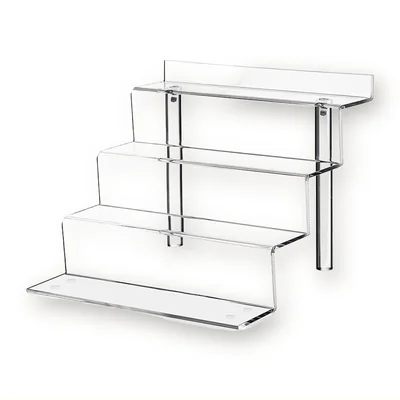
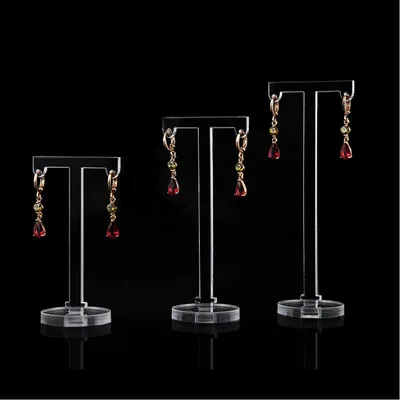
Acrylic risers, cases, sign holders and brochure holders are used in cosmetics, jewellery, electronics accessories and pharmacies. They look clean and last, and graphics can be printed directly or inserted behind the acrylic.
- Ask for the acrylic thickness per part. Thin acrylic flexes and scratches more easily.
- Ask whether edges are polished or flame-finished.
- Check how the parts are joined: glued, screwed or slotted.
- Check the protective film on both sides and the packing per piece.
Acrylic scratches in transit if it is packed loosely. Insist on individual bags or film, corner protection and cartons that do not let parts move.
4. Wooden displays
Wooden racks, crates and stands suit bakeries, delis, gift shops, fashion and natural cosmetics. They carry weight well and look warmer than metal. Specify the wood or board type, the finish, whether the stand is flat-packed and how it assembles. A wooden stand that needs tools to assemble may not be accepted by a chain whose staff set up displays themselves.
5. Metal displays
Metal racks, pegboard stands, rotating stands and bakery racks are the long-life option. Specify:
- tube or wire diameter and the steel gauge of shelves;
- finish: powder coating colour, chrome or another finish;
- load per shelf or hook and the total load;
- base type, levelling feet or castors;
- graphic holders for headers and side panels.
Metal displays are heavier and ship on pallets, so freight is part of the price. Ask for the packed size and gross weight per unit.
6. Comparing the materials
| Material | Typical lifespan | Freight | |
|---|---|---|---|
| Cardboard | Weeks | Full surface | Light, flat |
| Acrylic | Season to years | Direct or inserts | Volume and protective packing |
| Wood | Years | Inserts, engraving, printed panels | Heavier, often flat-packed |
| Metal | Years | Headers and panels | Heavy, pallets |
7. Retailer requirements
Chains often set rules for POS: maximum footprint, height, how the display is delivered, who assembles it and how long it may stay. Some require displays pre-packed with product and delivered to their distribution centre. Ask the chain for its POS guidelines before you design the display, not after the sample is made. Rules on cardboard quality, stability and the position of the brand logo are common, and a display that misses them can be refused at the store door.
8. The specification to send with your enquiry
- display type: floor, counter, end-of-aisle, hanging;
- dimensions or the maximum footprint and height;
- products to be displayed: size, weight and quantity per shelf or hook;
- material preference and finish;
- artwork, logo and Pantone colours;
- quantity, number of stores and delivery addresses;
- date the displays must be in the stores.
With this, a supplier can quote like for like. Without it, quotes vary because each supplier guesses a different construction.
9. Sample and mock-up
For a printed display we check the artwork and send a digital mock-up. For a new construction, we arrange a sample before production. Load it with your products, move it around and leave it in a test store if you can. Keep the approved sample as the reference for the pre-shipment inspection. Our samples page explains timings and how sample costs are credited.
10. Inspection and packing for a rollout
When the same display goes to dozens of stores, a fault repeats dozens of times. A pre-shipment inspection on a statistical sample (AQL) checks print colour against the approved sample, shelf load, assembly, finish and the packing. Ask for an assembly sheet in the carton, with pictures rather than text, so store staff can set up the display without calling anyone. If displays go to different addresses, agree how cartons are labelled per store before production, not at the warehouse.
11. Lead time and rollout
Plan on about 8–12 weeks from order to our warehouse for standard constructions, plus time for the sample on a new design. For chain promotions, add the time the chain needs at its distribution centre before the campaign starts. Rolling a permanent display out to many outlets is easier when one specification and one supplier cover all of them.
12. Displays in the context of documents
A display used by the shop is not itself a consumer product, so the GPSR usually does not apply to it. Lit displays are different: anything with LED lighting or a power supply needs CE documents per model. Cardboard displays delivered with product to a chain can count as packaging under national EPR rules, so check with your EPR scheme.
Next step
Send us your specification, or a photo of a display you like with the products you want to show. We return an offer within 2 working days. Request a quote.